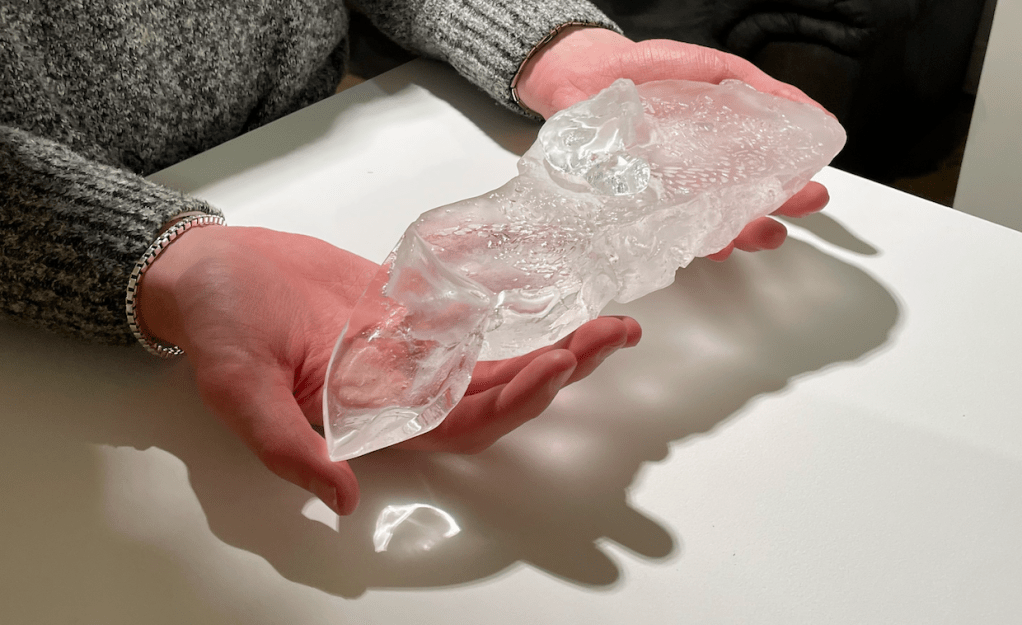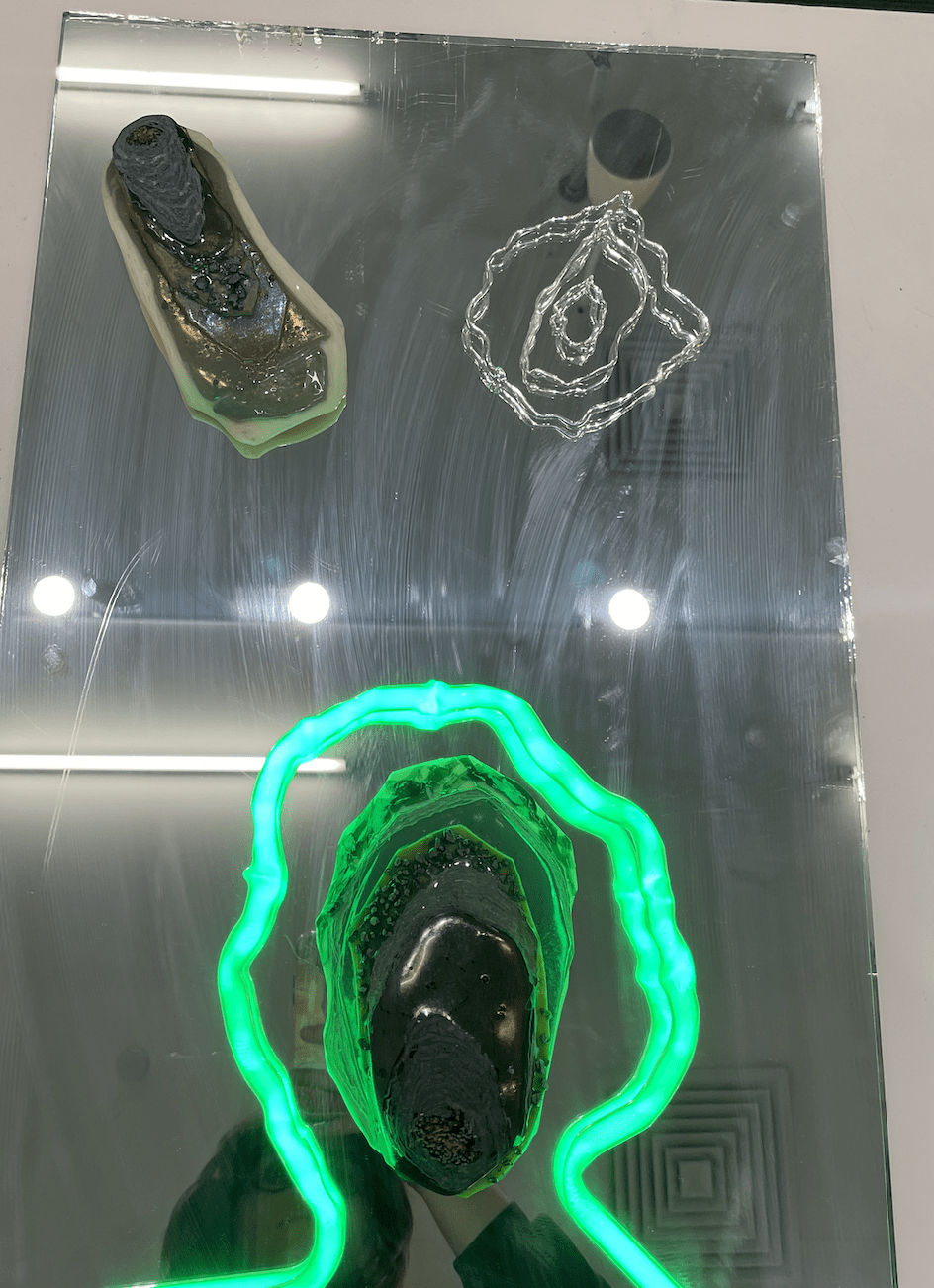
Glass is a beautiful, fragile medium that can be manipulated in many ways. Glass is similar to an oyster in this way because not only are oysters a source of nourishment, but they can also purify water, help clean pollution from waterways, and are capable of being used for many applications. The history of the oyster is intrinsically connected with the history of Brooklyn and the Gowanus Canal, as it was the first export to Europe.
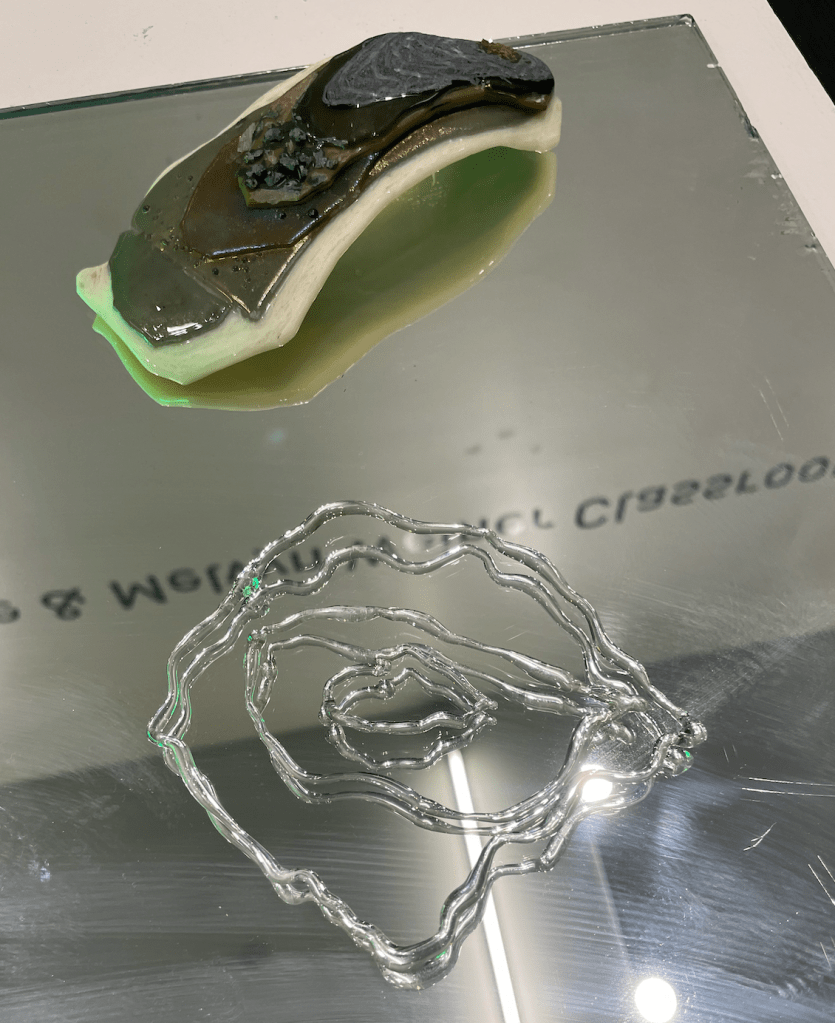
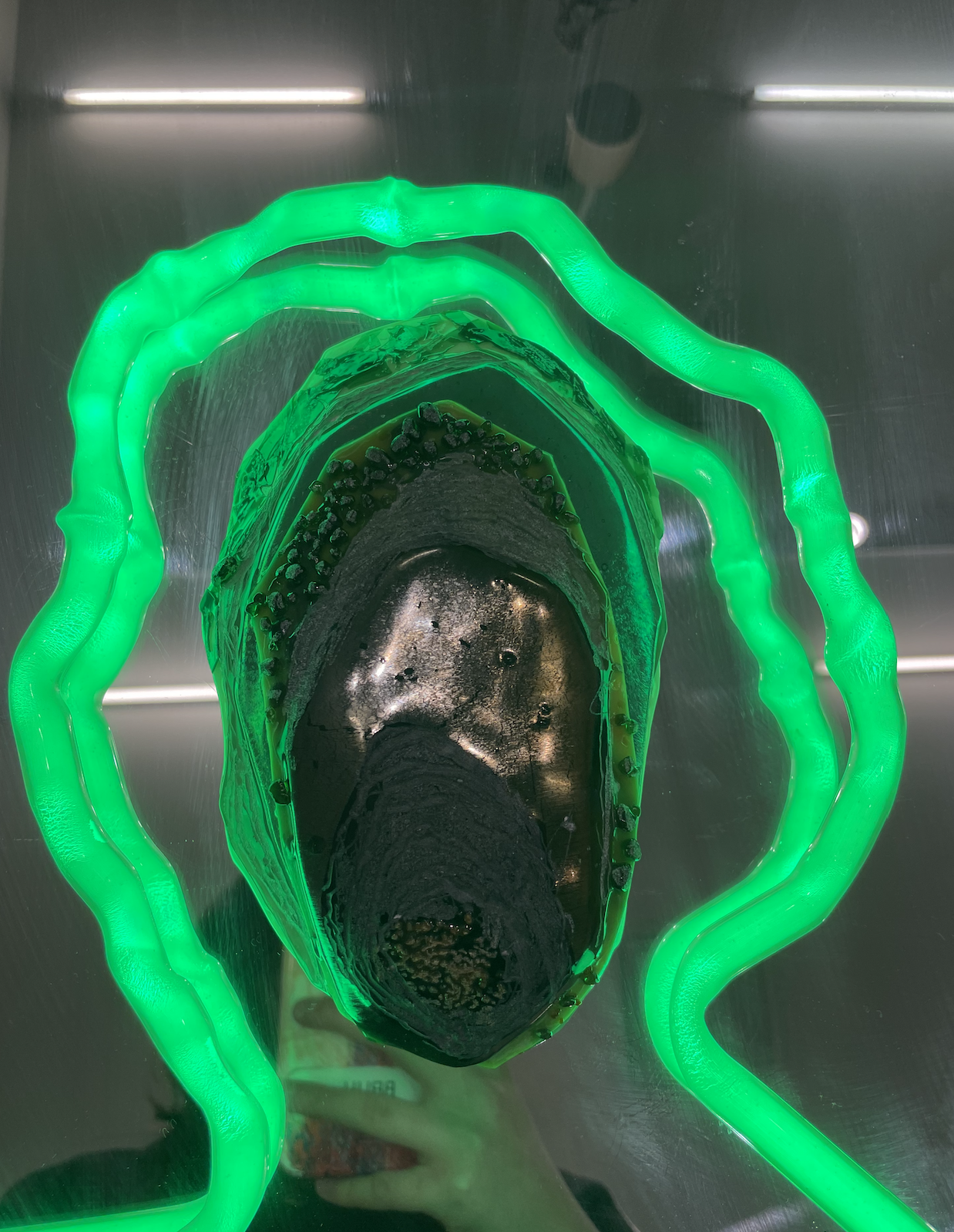
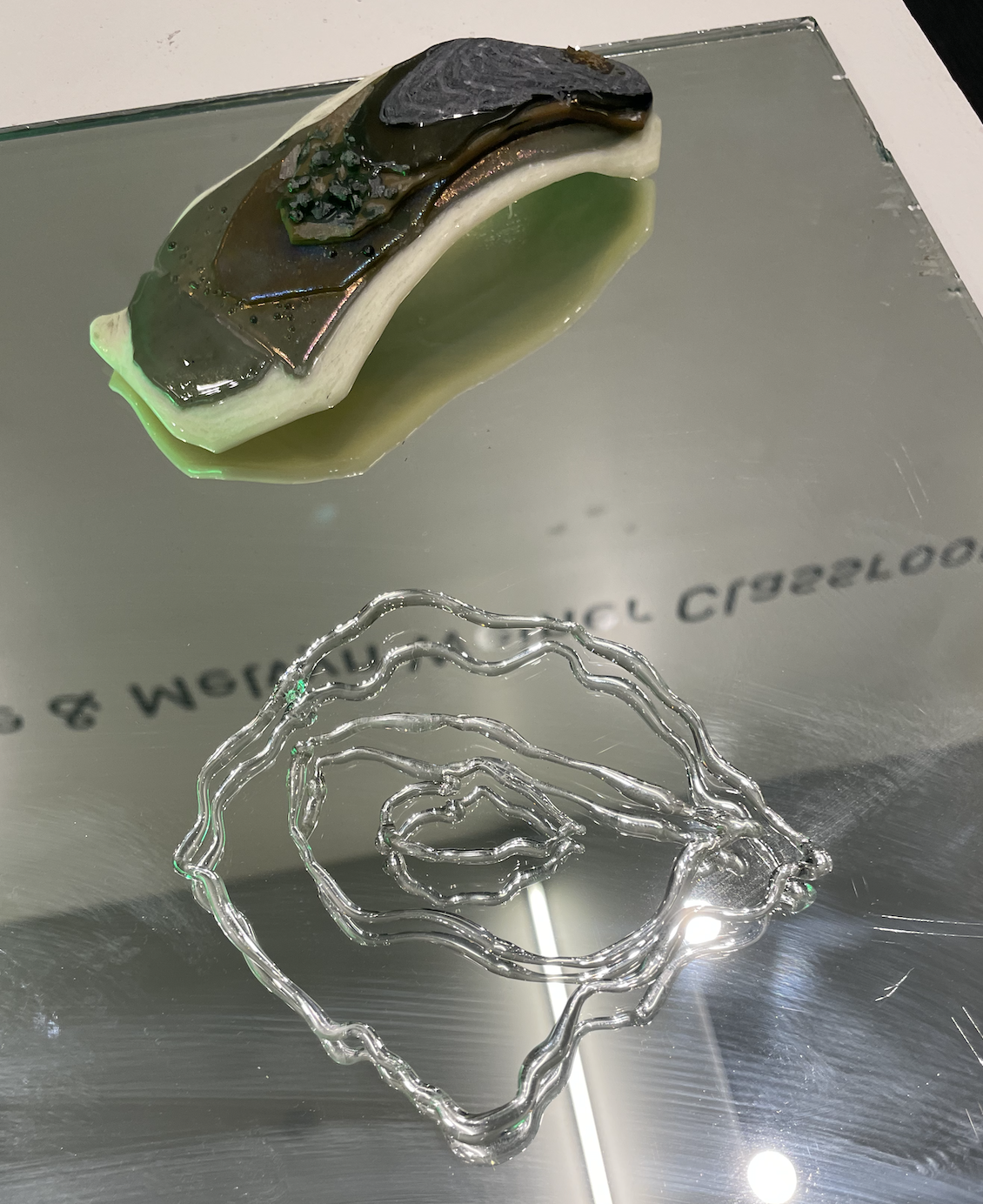
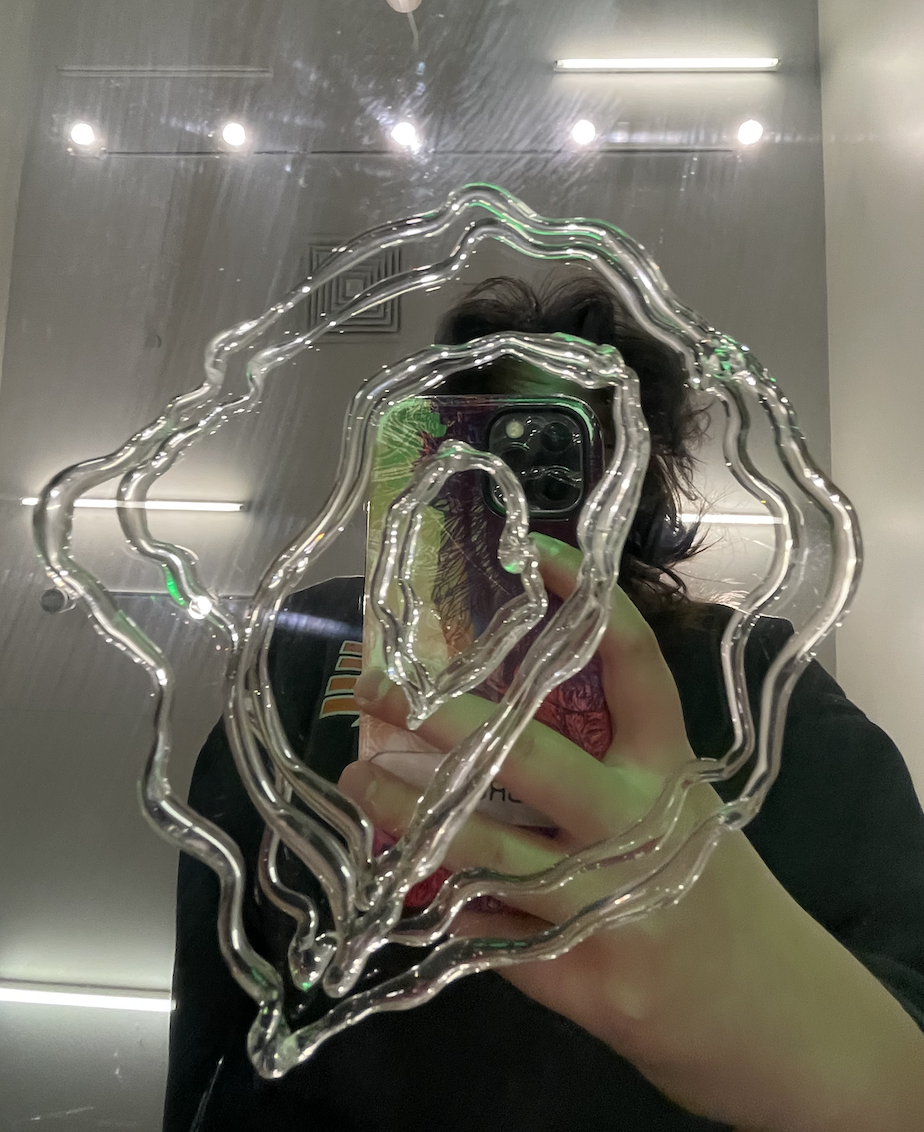
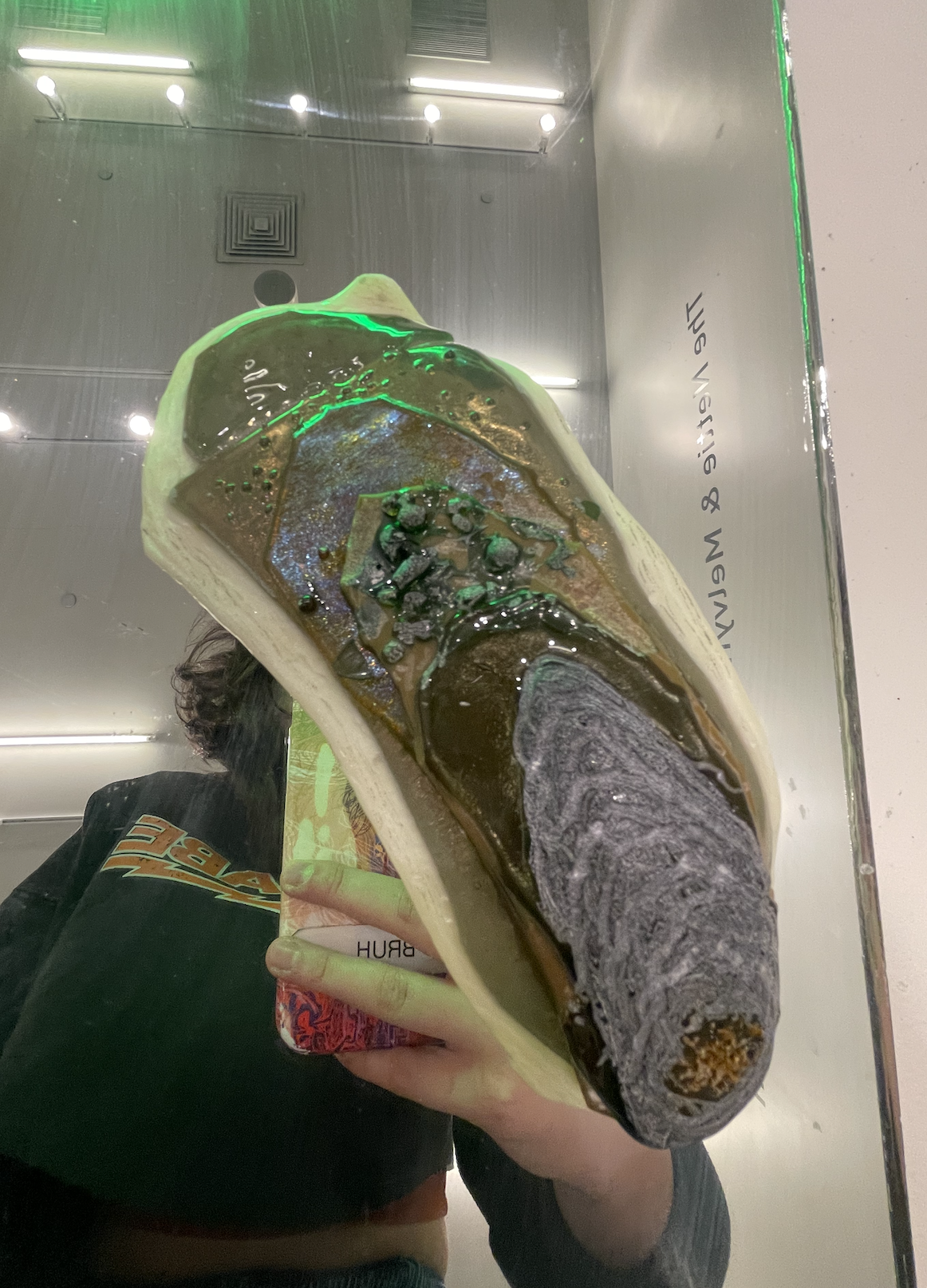
For this project, I used borosilicate, bullseye, dichromatic, and neon glass to create my specimens. I emplyed multiple glass techniques for this project through flameworking, slumping the oysters in the kiln, and coldworking my pieces. Neon is conventionally seen as tied to sign-making for capital and advertisement. Still, by subverting this idea and using it for art/sculpture, I am disentangling neon and capitalism, which connects to using oysters as purifiers rather than status signifiers. Furthermore, I used dichroic glass to match the pollution oil slick texture on top of the Canal that reflects and glitters in the eerie green neon light. I created another oyster half out of clear borosilicate glass to connect to the science of oysters as purifiers because borosilicate glass is used in most scientific glass.
Additionally, I carved and sanded different layers of the kiln-formed glass shells to remove the beauty traditionally associated with polished glass, make it look more like an oyster, and create a textural sensory experience. Touching art is important because it creates a different connection for those interacting with the objects beyond looking. It is a more accessible way for numerous groups of people to experience art, especially those with sensory processing issues. My Uncle Elliot, who introduced me to glass as a child, has recently become blind, so he has been unable to enjoy glass and visual art. I made these oysters to show him that glass can be accessible and he could still be part of this community.