Reading tarot is simple in terms of the process of setting up and learning the card meanings, however, becoming a good tarot reader is difficult. The process involves the cards of course, and the person reading the cards, aka the reader. The person being read does not always have to be the person reading the cards; for example, most people who pay to have their tarot read cannot read tarot themselves. The cards are laid out in specific formations, which create a structure for the cards to be understood. For example, in my practice, I most often use a three card spread, where the first card is the past, the second card is the present, and the third card is the future. (Tarot has an emphasis on three’s just like grail stories, who would have guessed?) Then, the reader will shuffle the deck until they feel as though the cards are ready to be pulled and laid on the table. Once the cards have been laid out in their formation, the reader will generally ask the reader questions about their life, or pick up on visual or thematic patterns between the cards. Then, the reader will summarize their thoughts on the connections between the cards, and what this means for the person being read. The reader creates a story and uses all the elements of the cards and their order to shape it. In my own practice of tarot reading, I do not tend to read for other people because it can be an emotionally draining storytelling effort to give to a stranger. I am also still learning what cards mean when placed together/picking up patterns from the cards, so I do not feel educated enough about tarot to read for others. However, I do feel connected to tarot cards, and oral methods of storytelling.
Tarot cards have been used to understand the past, predict the future, and question the present, in the same way that Grail stories are used to make connections. Grail stories provide an insight into the culture of their time period within Europe, and how those beliefs continue to shape our present reality. Therefore, presenting the characters and symbols within Grail stories as tarot cards makes perfect sense to me. Additionally, much like Grail stories, these cards gain meaning from both their metaphorical connections/understandings, but also the more concrete imagery used. For example, tarot cards and Grail stories both rely upon the same color associations, i.e. redness for passion, to create meaning and illustrate their meanings. The characters and objects within the Grail stories are detailed and descriptive for the most part, so being able to actually visually illustrate them piqued my interest. I want to apply the words the authors have used to describe their characters to illustrate the cards, and put my own creative spin on them.

I have also been interested in mysticism, religion, and magic, which both Grail stories and Tarot cards contain. However, Tarot cards are more often forgiving of their characters/figures within the cards than Grail stories. This is because there are no cards which are truly evil or sinful. In Grail stories, there are characters who are “evil” by the author’s standards, but by reimagining these characters through Tarot, the characters can be understood with more nuance and depth. Additionally, there are many variations to meanings of Tarot cards or variation in tarot decks, much like the different Grail stories.
Grail stories have been recreated in movies and television shows, and have really come to life in that way. Tarot cards have also been utilized in the film medium, and is a practice that is really about interacting with others. When Grail stories had been read or performed in the past, there was some type of live audience. For Tarot readings, there is also most often an audience or person being read for. Tarot cards were originally used for playing cards/like a regular deck of cards. As regular playing cards, they were still used to foster interaction between people and a common understanding, much like the reading or performance of a play of Grail stories. Because these cards were originally playing cards, there are four suits: pentacles, cups, swords and wands. There are numerical values for all of these cards, from 1-10, with a king, queen, and page for each suit as well. These cards are called the minor arcana, which is used to understand the daily issues or smaller scale issues for the person being read. There are also 22 major arcana cards which demonstrate overall/lifelong struggles or themes for the person being read, which I have connected to Grail characters in this project. The minor and major arcana cards come together to form a reading with depth, and give the reader a lot of information.
Tarot reading cannot really be done with a single card, and Grail stories cannot be understood through just one character or object. One must understand the layers and connections between characters in order to fully understand them. In Tarot, in order to understand a reading, a reader must consider what each card says to adequately understand what the cards are saying as a whole. You cannot just base a reading from a single card that has been pulled, they must be put into perspective with all the cards read. Each card is connected to each other through the Tarot reader, which is the same for characters within the Grail stories. In class, we connect characters and ideas together to understand the work(s) and time period more thoroughly. There are also cards that can be associated with each other that have more power when together. For example, the moon card (Igerne) is often associated with the Magician card (Merlin), or the Justice card (Cundrie) and Judgment card (Parcival). Through these associations and connections, a story is created for the reader, much like how the characters and objects in the grail stories relate to each other to create meaning.

On a personal level, trying to sit with these texts for a long period of time is sometimes frustrating. The rampant sexism and antisemitism is hard to swallow for me and connect to as a Jewish woman. To make this assignment meaningful, and creative, I wanted to demonstrate my understanding of the texts through an art form that I like: Tarot. Creating and reading Tarot combines everything I like: drawing, writing, and storytelling. So, to be able to do this project and understand these characters my own way is something I greatly appreciate.
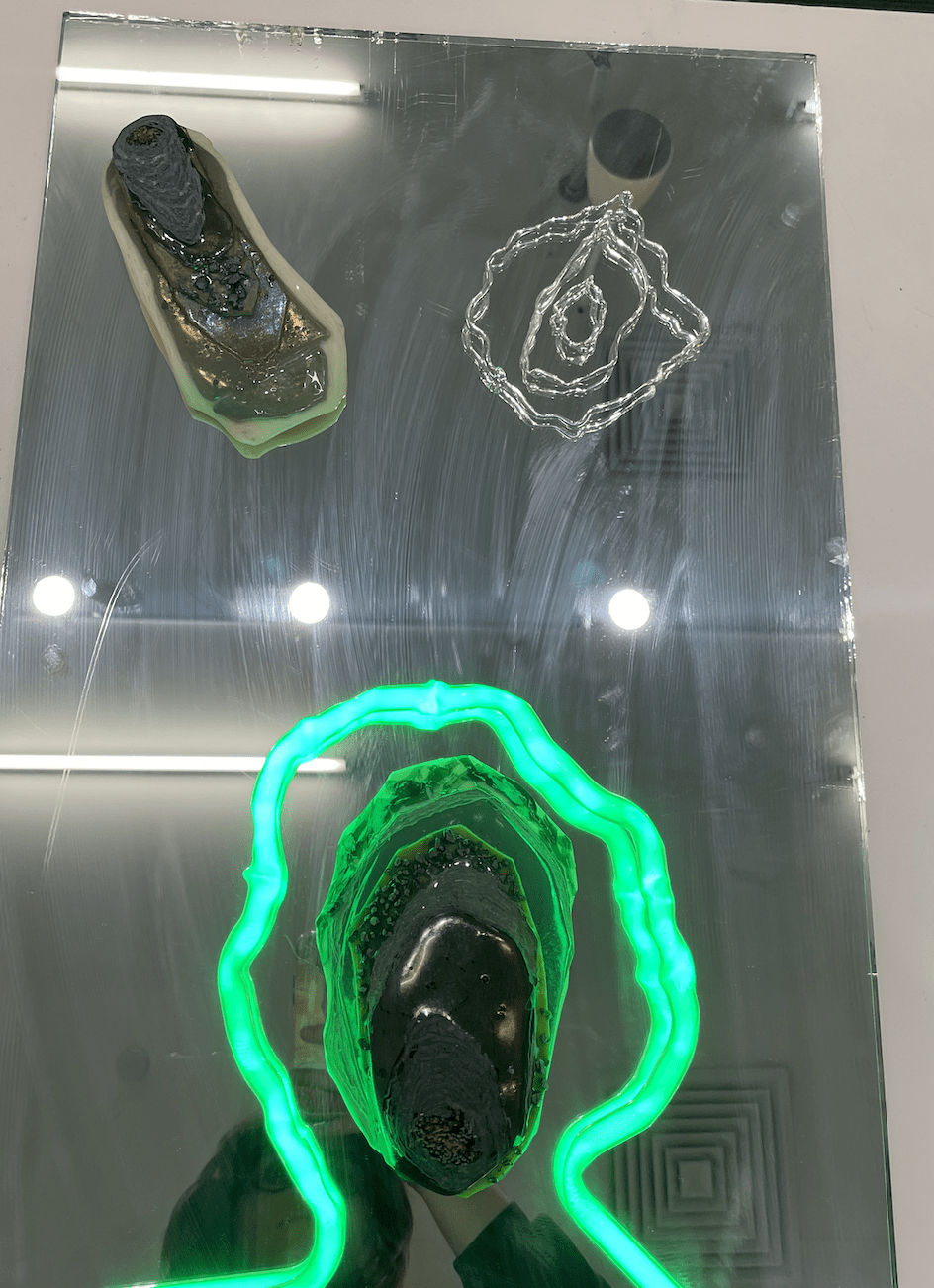
In terms of my artistic decisions for characters, objects, and themes highlighted, I chose based upon my knowledge of Tarot, and my understanding of these characters through close reading and in class dialogues. I did characters that are popular/well known such as Lancelot, Parcival, and Gawain, but also characters not given much attention such as Queen Belacane, Igerne, and Sigune. The cards I chose to illustrate are Queen Belacane, The Sun card in my deck, and The Holy Grail, The World card. I chose Queen Belacane because she is often forgotten or unheard of within modern retellings of Grail stories. I looked at images taken by NASA of the sun, and chose to use these pictures as references for the texture and coloring of her skin, however, I made sure to include brown and black hues to highlight the importance of the Queen’s Blackness/racialized identity. To only depict her as a bright yellow sun would ignore her race, and therefore erase the reason Gahmuret left her: anti-blackness. I also created a halo around her to represent her righteousness. This halo also separated her from the background a bit, and gave more depth of field to the composition. The lettering is a greenish color because of the various colors attributed to where the Queen lives, and it glows because that is my artistic style with lettering. This card was challenging because I normally have a much more abstract art style, but out of reverence for the Queen, I tried a different style/a more realistic style for her card.
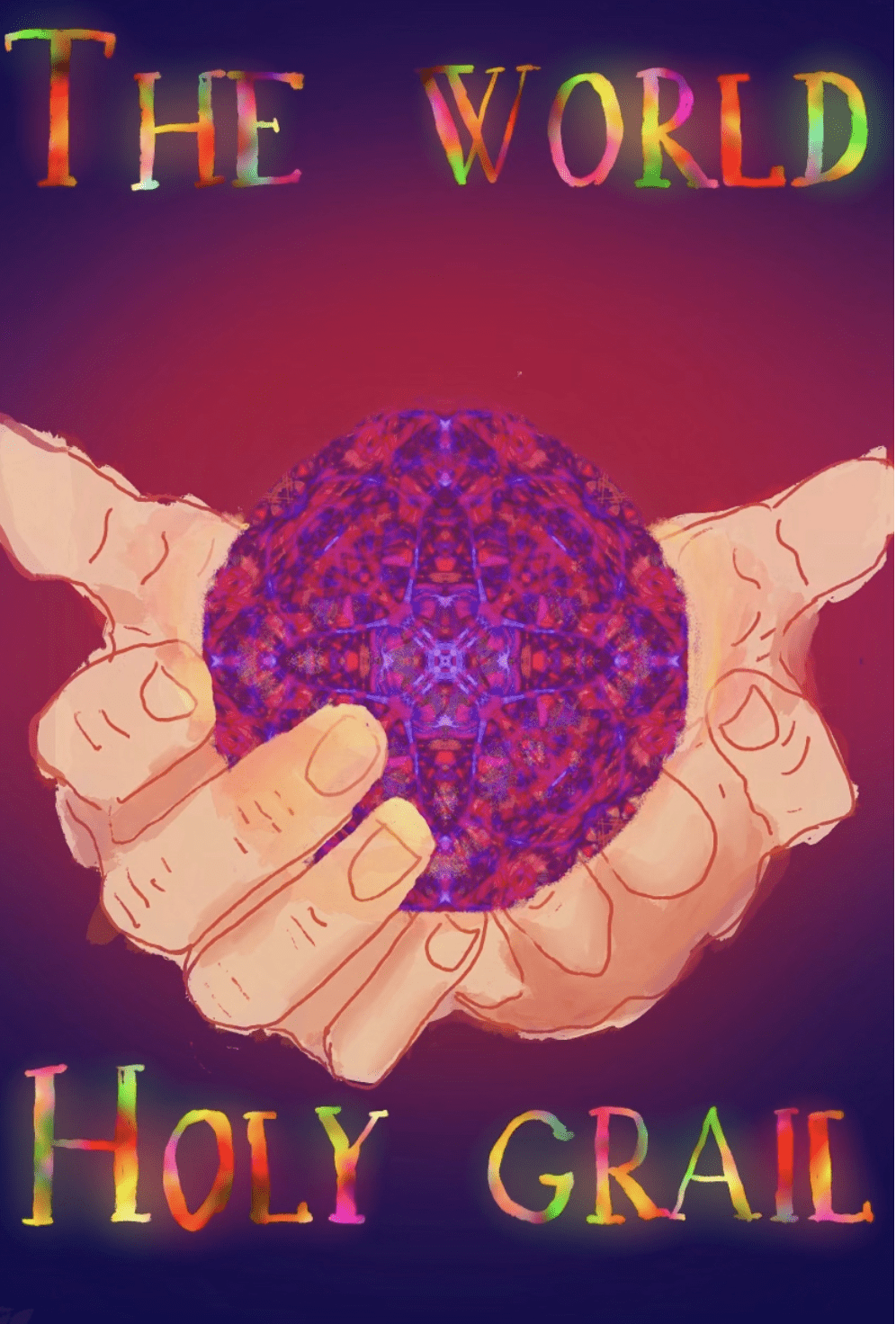
The other card I chose to illustrate is the Holy Grail/World card. I utilized a Parzival-ian approach by depicting the Grail as a stone, more specifically, a hyacinth garnet. The shaping of the stone is similar to the spherical shape of the earth, but the inside of it is an abstract mandala. The coloring is similar to an actual garnet, with reds, purples, blues, and oranges. Additionally, the stone rests upon a set of hands, which is a characteristic that is shared throughout the grail stories. There is also a glow around the stone, like the illustration of Queen Belacane, but this is to reflect the shine actually present within gemstones. Additionally, the lettering is more rainbow-like in this card to reflect the imagery of stained glass found within churches. Overall, due to some personal issues, I was unable to illustrate as many cards as I would have liked, but I did put immense dedication and effort into the cards I was able to draw. I also thoroughly enjoyed researching the major arcana cards, and creating meanings for myself. I did a couple rounds of reading with these cards/meanings in mind, and I was able to create connections between characters that I would not have otherwise. I have enjoyed working in this medium, and look forward to continuing on in my own Tarot journey.
Minor arcana:
Cups
The suit of cups is associated with water, feminine energy, the emotional level of consciousness, relationships, love, and connection. Water, which is held within cups, is fluid, much like feelings. Water is often healing, flowing, cleansing, and transformative. A reading dominated by cups can be understood as a person thinking with their heart over their head, and is associated with creativity, fantasy/imagination, and romanticism. The more negative interpretation is to be overly emotional or detached from reality, having an unrealistic expectation of a relationship/goal. Therefore, the queen of this set is Lady Love, and the imagery associated with this set would be the scenes involving travel by water, or the importance of water within grail stories. The cups cards would be depicted as cup versions of the grail, and would feature various blues.
Swords
The swords are the masculine suit of intellects, thoughts, beliefs, and etics. This card must be balanced with the cups (feelings) and wands (spirit) in order to create a good and whole relationship/reading. This card is associated with air, constant motion, the unseen, and force. This card indicated knowledge, action, and change. This card would be depicted through various Knights, and represent the most wholesome understandings of chivalry/knighthood found within grail texts.
Pentacles
The pentacles represent levels of consciousness connected with the martial/physical world, such as health, finances, work, and self image. This card is representative of the earth, it is tactile, and tangible. Like the earth, this card indicates growth, groundedness, supportiveness, and fertility. The negative aspects of this card can indicate greed, over indulgence, and neglecting responsibilities in a reading. Therefore, this card would be depicted as the various women who carry the Grail, because these women provide the grounding of the card within the material world. Additionally, the grail creates growth and abundance, which is only possible because of these women.
Wands
The wands represent spirituality, strength, and intuitions. They are connected to the element of fire, which is unpredictable and energetically passionate. This card is also used to understand masculine sexuality, which reflects willpower and personal energy. A negative interpretation can mean egotistical behavior, a lack of direction, or issues within the first stages of development for an idea/goal. Therefore, this card is depicted by the Kings of the grail stories, because they are often egotistical, while also driven by their own willpower. Each card would have the kings either grouped together or fighting, as they have been shown throughout the grail stories.
Major Arcana:
The Fool (actually 0)/Gawain
Gawain is described in Perceval as “ renowned and esteemed for all knightly virtues” (Perceval, Chretein, page 52), yet he is also a “wicked and disloyal servant” (Holy Grail 53-4). Within the parzival text, Gawan is a side character, who’s quest is seemingly unimportant. In this tarot deck, he is the fool. The fool when upright is innocent, a representation of new beginnings, and a free spirit. Often, when Gawain is introduced into the story, he brings some new beginning or new plotline, which is true for both Percival and Parzival. His purity is somewhat at face value, because he is not a holy grail knight in any text, which brings us to the reversal meaning: reckless, taking advantage of others or situations, inconsideration, and holding back. Gawan can be seen taking advantage of his good looks and noble lineage for gains in love and knighthood. He is told in holy grail that his “chivalry has been ill employed” by the monks in holy grail. Even when given the opportunity to repent with the hermit in Holy Grail, he ignores the hermit, and does not repent for his wicked life, therefore being inconsiderate of the advice the hermit tries to offer him, and inconsiderate of his soul in this universe. He holds himself back from being on the quest for the holy grail because of his own free spirited-ness. Furthermore, Gawan recklessly killed someone within another kingdom, and must clear his name in joust, which indicates his inconsiderate recklessness of other kingdoms and customs. He also often enters relationships with women who cannot or should not be with him. Therefore, in this deck, Gawan is the fool of the deck.
The Magician/Merlin
The magician card is one of the most powerful cards in the deck because it indicates some desire for power or of power. But, this is a kind of power that is often behind the scenes, and not like the power a king, CEO, or powerful person holds. Therefore, the magician card is Merlin, not only because he is a magical being, but also because of his clear demonstration of willpower, desire, creation, and manifestation. Within the text Merlin, the character is endowed with power from both the devil and God, making him seemingly all powerful. In this section of text, it is described that “ the child inherited knowledge of things past from the Enemy, and, ” in addition, knowledge of things to come was bequeathed to him by God. It was up to him which way he inclined. If he wished, he could answer the claims both of Our Lord and of the devils; for a demon had made his body, but Our Lord had given him the spirit to hear and understand” (Merlin 118-119). He can choose to use his power however he desires, and can manifest or create outcomes, as it happens with the birth of Arthur. Merlin becomes entrenched with Arthur’s family generations prior to Arthur’s inception, thus ensuring that Arthur and the round table exist. Because of Merlin’s skills, he is able to trick Igerne into sleeping with a man other than her husband because of a manipulative illusion Merlin creates. The reversal of this card is qualities of trickery, illusions, manipulation, and being out of touch with those around him, which is exemplified by the aforementioned actions. However, the reversal also can mean poor planning, which is not something that Merlin does, but it is what those around him do. Characters try to outsmart or trick him, which is poorly planned because Merlin effectively knows all, which is similar to how the card can be read in tarot. When the magician falls next to other cards, it can indicate some other type of poor planning within whatever that card indicates, or the necessity to plan better. Therefore, Merlin exemplifies the magician card in tarot.
The High Priestess/Guinevere
Guinevere is an interesting character, much like the card the HIgh Priestess. The High Priestess is a feminine version/mirror of the Hierophant. The high Priestess card exemplifies intuition, the unconscious, and the inner voice when upright. Her intuition tells her that Galahad is Lancelot’s son in Holy Grail (holy grail 23). Additionally, when she speaks, she is used to convey information for the narrator within the texts as exposition or filler. This representation of Guinevere, however, is more easily understood through the reversal meaning of the card: lack of center, lost inner voice, repressed feelings, secrets, withdrawal, silence. Guinevere has few lines of text where she establishes herself as an individual with dimensionality within these stories. When she is mentioned at all, she is generally in tears, doing “feminine” things like kissing, or admitting to an affair with Lancelot. Her repressed feelings for him come out in The Quest for the Holy Grail, when she chastises him, saying, “‘Ah, Lancelot! you have betrayed me even to death in leaving the household of my lord the king in order to go into strange lands from which you will never return unless God restores you’” (Holy Grail 26). In that same section of text, “ she began to make such a moan that there was no man in the world so hard-hearted but, on seeing her, would have pitied her (Holy Grail 26). Lancelot leaves Guinevere uncentered, and pulls on her repressed feelings because of their secretive romance. However, this card is a powerful spiritual card, that calls upon the reader to search within themself, and find some type of higher power through their own intuition. This applies to Guinevere because in order for her to find salvation for her affair, she must look within herself and seek understanding for why she likes Lancelot.
The Empress/Herzeloyde
The Empress is another powerful card of feminine energy that mirrors the Emperor card. This card is represented through motherhood, fertility, nature, nurturing, and abundance. Herzeloyde, as Percival’s mother is named in Parzival, represents this. She begins the story in Arthurian legend unnamed in Perceval, yet she is known and named as a mother, who protects her son from the ills of knights (Perceval 6). She faints when Perceval learns of knights, and tries to hide their existence from Perceval because she does not wish for him to be like his father, who, in Perceval and Parzival, is fatally wounded as a knight. In Parzival, “She was bright as the sun and lovely of person. That woman enjoyed both wealth and youth, and joys in superabundance; she was high above perfect- tion’s mark. She turned her heart to gracious skills, thereby winning the world’s favor. Lady Herzeloyde the Queen––her bearing found profit in praise, her chastity knew fame––queen over three lands, Waleis and Anjou––over these she was lady. She also wore the crown in Norgals, in the capital, Kingrivals. (Parzival 44). Her kingdoms have abundance, and she has an abundance of power before and after her marriage to Gahmuret. Her fertility is also expressed in Parzival through breast feeding, “To her breasts she drew him [Parzival], whom womanly misconduct shunned. It seemed to her as if she had called Gahmuret back into her arms. She had no thought of haughtiness. Humility came readily to her. Lady Herzeloyde said in her wisdom: ‘The Highest Queen offered her breasts to Jesus, who afterwards, for our sake, accepted in human form the cruelest death on the Cross, manifesting His loyalty to us. If anyone belittles His wrath, his soul risks ungentle judgment, no matter how chaste he be or was. Of that I know the true tidings.’That land’s lady wetted herself with her heart’s sorrow’s dew; her eyes rained down upon the boy. She knew how to hold to a woman’s loyalty. Her mouth knew full well how to form both sighs and smiles. She rejoiced in her son’s birth. Her mirth drowned at grief’s ford. (parzival 48-49). She relinquishes her grief in order to nurture her son. However, she is not entirely a perfect mother, as none are. The reversal of this card is dependence, smothering, emptiness, and nosiness. When Perceval wishes to leave in both stories, she dies as a result of her dependence upon Percival, for meaning, and the emptiness within herself. She cannot live without someone to take care of or be with, because of her smothering nature, which can be good in certain instances. Her nosiness is more in her advice to Perceval to ask questions, but once Perceval meets a true knight this nosiness/curiosity is stifled. This card can demonstrate the importance of nurturing oneself/others, and Herzolyde as a character certainly exemplifies this.
The Emperor/Uther Pendragon
The mirror to The Empress card, the Emperor is a card which demonstrates authority, structure, control, fatherhood. Uther Pendragon, as a mighty king, demonstrates his authority various times by dictating/waging war, constructing the round table, and defeating those who stand in his way. He is a literal father and a metaphorical one, as he creates Arthur, and is like a father to his kingdom. When he dies, as revealed in Merlin, he shares his wealth with the rest of his country, and provides for them in that way. By nature of a king, he provides structure to his kingdom, and because of the creation of the round table, Uther sets up the structure for later tales of the round table to occur. The reversal of this card is tyranny, rigidity, coldness, and domination. The rape of Uther’s later wife, igerene, demosntrates all of these qualities. Igerne was the duchess and wife of a nobleman that sat at Uther’s original round table, and Other fell in love with her, yet she refused him. When Igerne and her first husband left, Uther tyrannically warred against him. When uther needed more time with her, he asked Merlin to help him, so he used magic to look like her husband to dominate her, and have sex with her. Afterwards, when Igerne conceives a child, Uther coldly promises that Merlin can have the child, without asking igerne. Once the duke, igerne’s husband, is dead and defeated, Uther decides he must wed Igerne as a settlement, which is a demonstration of the control and cominiation Uther is capable of. This card is not completely negative; sometimes our goals can only be solved through these means, but this card also makes us question the force and means we use to attain our ends.
The hierophant/The Fisher King
The Hierophant represents tradition, conformity, morality, spirituality, and religion. The Fisher King upholds these ideals because he is a Grail King, which means he is bound to serve the grail, and live by it. But, as seen in these narratives, religiosity and tradition can bring pain. The Fisher King forever lives in pain because of his injury, but must continue living to sustain the grail. The pain the king feels can only be undone by someone challenging the status quo, which is the reversal meaning of this card. To extrapolate on this, the reversed meaning of the card is rebellion, subversiveness, and freedom. Only when the Fisher king meets someone to challenge the status quo of polite and shallow conversation in this time period can he attain freedom from the Grail and his injury. Additionally, through the Fisher King’s disability, she is subversive to the other able-bodied people, men specifically, within these texts. He is one of the most powerful and spiritually connected people within the books, which makes him fit with the hierophant more than actual clerical leaders/clergy members within these stories because only he is connected to the grail; not them.
The Lovers/Gahmuret and Herzeloyde
The lovers is a card most associated with romance, partnerships, duality, union/unity, harmony, and the alignment of values. From Herzeloyde’s perspective, her relationship with Gahmuret is representative of this, and for a brief period, it is. Their relationship, however, did not start this harmoniously. At Hero=zeloyde’s tourney, Gahmuret won, and his prize was marriage to her. He refused because of his own wife/lover Bellacane, so Herzeloyde brought him to court, and Gahmuret was forced to marry her. But, this partnership came to bring joy, and according to Parzival, Everyone went to rest. The queen said to her beloved: ‘Now give yourself over to my care’…. the queen took him to where he found joy, and all his sadness disappeared entirely. His grief was vanquished and his high spirits all renewed. Such, indeed, had to be the effects of Love’s company. Lady Herzeloyde the Queen was there deprived of her maidenhood. Mouths were unspared––they exerted them to the full with kisses and warded grief away from joys” (parzival 43). Together, they make Parzival, who becomes representative in their alignment of values because of his desire for knighthood like his father, and his desire for love like his mother. Parzival has his fathers “boldness and courage”, and his mothers determination and capacity for love (Parzival 13). But, the reversal of this card also mirror their relationship. The reversal meaning is a loss of balance, one-sidedness, disharmony, and self love. When Gahmuret leaves Herzeloyde to continue being a knight, he is demonstrating self love, as he is choosing what brings him joy, rather than what makes them both happy. It destabilizes their relationship, and creates a lack of harmony in Parzival’s upbringing. After Gahmuret leaves, Herzeloyde becomes unbalanced and somewhat unhinged, as she retreats from society to raise her son without the influence of knights. This card asks readers to value the partnerships in their life, whether romantic, business, or otherwise, and question it if reversed.
The Chariot/Lancelot
The chariot is a card about direction, control, and willpower, much like the Magician and Emperor. However, the chariot is different because it is more a card to continue in whatever direction you are going, and stand firm in the decisions you have made. This card is representative of Lancelot, because once he starts the quest for the holy grail, he remains firm in his decision to become holy and honor chivalry. On a larger scale, Lancelot represents the round table, as he is one of the more famous members of it. Arthur says that he has a ““the great love that I have always cherished for them makes me speak this way, and it is no wonder if I am distressed at their departure.“(Holy grail 21). By Arthur telling Lancelot this, it cements the connection between Lancelot and the round table. Lancelot demonstrates that despite wanting to be chivalrous and good in the eyes of God, it is a difficult task that can be challenging. It takes strength and willpower to stick to this course, which Lancelot sticks to once he confesses to “the fact is that I am dead in sin because of my lady whom I have loved all my life, and she is Queen Guinevere, the wife of King Arthur. It is she who has given me an abundance of gold and silver and the valuable gifts which I have sometimes handed on to poor knights. It is she who has set me up in great luxury in the high places I occupy. It is for the love of her that I have performed the great deeds of prowess of which the whole world talks. It is she who has raised me from poverty to riches and from misery to all the blessings earth affords. But I know well that because of my sin with her Our Lord is sorely displeased with me as He clearly revealed to me last night” (Holy Grail 63-64). Once he confesses this, he is able to accompany Galahad on part of his journey for the grail. Lancelot’s affair represents the reversal of this card: a lack of control, lack of direction, aggression, and a lack of self discipline. This connection is obvious; when Lancelot loves Guinevere, it is because he lacks direction, control, and discipline. Therefore, lancelot represents both the round table in the stories, and exemplifies the chariot card in tarot.
Strength/Lady Jeschute
Lady Jeschute is raped by Perceval in both iterations of the story, and is severly punished for it; being forced to follow her husband naked until he finds the man who did it. She shows inner strength, focus, and courage by accepting this punishment and to continue living after this heinous act, like the card of strength. The card of strength often means inner strength, bravery, compassion, focus, courage, persuasion, influence. When she meets Pervical again, she acts with courage, yelling at him, “ If you had not approached me at that time, my honor would still be undisputed.’(Parzival 109). Her naked body is an influential symbol that both texts use; she is a symbol for women blamed for actions caused by man. Her nakedness embarasses Parzival, influencing him to change, and recognize that he has sinned and caused harm to another person, in direct contrast to chivalry. Her naked body also connects her to Eve, the original woman, through her insecurity in her nudity, much like Eve after she ate the forbidden fruit. This brings the meaning of the revserals up, it means self doubt, weakness, insecurity, low energy, and raw emotion. Lady Jeschute shows raw emotion by crying in both stories, and low energy because of this repeated/constant trauma. She doubts whether she will ever be happy again and believes “because of him she would suffer shame and distress such as no unfortunate girl had ever known” (Perceval 10), deomstrating self doubt. But this card is not a negative card when reversed, it can be interpreted as a necessary moment of doubt or raw emotion, because a person cannot always be focused and courageous. This card is thoroughly embodied by Lady Jeschute.
The Hermit/Trevrizent
The Hermit card parallels the understanding of hermits within the grail stories because Hermits are representative of contemplation, a search for truth, and guidance in both. However, for this card specifically, we will discuss Trevrizent, Parzival’s uncle. He lives on Mount Salvation in Parzival, in a cave, where he only eats roots and plants, but no meat for fear/disgust of blood. He searches for truth, and as a former knight, he can offer rare insight to current knights. More often than not in these stories knights stop being knights because they are killed in their line of work, but the hermit has survived, and gives Perceval a chance. He says “Now I want to direct you and give you penance for your sin.’(perceval, chretien 74-5). The reversal of this card is loneliness, isolation, and being lost. When characters come to a hermit, they are in search of guidance, and are often lost. They are lonely in their life of sin, and isolated because of it, so they seek out the hermit for guidance, as Parzival does in both stories. Monks could also be considered hermits, but the hermit lies outside of societal/religious structures, which gives them the freedom to contemplate spiritual issues without the pressure of the Church. This freedom for contemplation makes Hermits more approachable for truth because of their separation from the church, which after the Crusades, was not super well respected.
Wheel of Fortune/Feirefiz
The wheel of fortune card represents the Changing cycles, inevitable fate, destiny, and a turning point. When Parzival meets Feirefiz, toe=gether they change the cycle of the Grail, and this represents a turning point in the story. Additionally, Feirfrez’s existence, as a mixed race person represents a change during this time period in beliefs about “heathens’ ‘, and while he converts to Christianity, he is still a Black man portrayed in a positive way during a racist time period. In Parzival, he speaks well, referencing Juno and Jupiter, and as Roman gods, there would soon be a revival in interest in Greek/Roman mythology. By referencing these gods, Feirefiz is connecting to them, and possibly representing the turning point within Europe out of Medieval time and into the renaissance. He is one of the grail knights, which further elevates his status, and through his baptism, he is given authority and shows that even “heathens’ ‘ can be worthy of the grail, which is relatively forward thinking for this time. The reversal of this card is of control, clinging to control, bad luck, breaking cycles. Breaking cycles is not always a bad thing, as when Feirefiz and parzival find the grail, they break/change the current cycle. However, Feirefiz does seem to have no ability to control his feelings/attraction to women, as he is known to fight for numerous queens across the world. At first he represents bad luck when he fights Parzival because he is such a strong fighter, but later this reunion becomes positive. Once Parzival is reunited with his brother and Cundrie, he can return to his wife and kids, which means he can reverse his fathers cycle of abandonment. In a way Feirefiz can also change his fathers cycle by maintaining loyalty to his wife, rather than knighthood/knightly tasks. This card makes readers question how they interpret “bad luck” or negative events in their life, and instead see it as a change or break in a possibly negative cycle.
Justice/Cundrie
Justice is a powerful card within tarot, and it represents clarity, truth, balance, and law. Cundrie Le Surizerie brings truth to the grail stories by revealing Perceval’s failure to question, and help the Fisher King. she says, “How wretched is the man who sees the perfect opportunity and still waits for a better one! And you, you are the wretched one, who saw that it was the time and place to speak and yet stayed silent; you had ample opportunity! It was an evil hour when you held your tongue, for if you had asked, the rich king who is so distressed would now have been quite healed of his wound and would have held his land in peace, which now he will never do. And do you know what will happen because that king will not now rule his land or be healed? Ladies will lose their husbands, lands will be laid waste, girls will be left in distress and orphaned, and many knights will die; all these evils will happen because of you.’ (Perceval chretien 54-5). Her speech in Parzival is essentially the same, except in that story, she is the third grail Knight, which is incredibly subversive for this time period. She is one of the only characters known to encounter/use the grail to feed Sigune, which demonstrates her religious goodnessBecause of her entrance, the quest for the holy grail begins, demonstrating how crucial she is to the stories. Her appearance, which both authors thoroughly describe, is magical, animal-like, dark skinned, and strikes terror in others. Yet, this appearance also gives her power and respect. But the way she is described is somewhat unfair, in the Perceval story it reads more like a racist description of a woman of color as discussed in class, which is related to the reversal of this card. The meaning is unfairness, unaccountability, and dishonesty. Another interpretation of this is that Cundrie calls out the other characters for their lies, and forces them to take accountability for their actions, like Parzival when he encounters the grail. But because she is a grail knight, she rights these wrongs.
The hanged man/Sigune
The hanged man card can often look sinister to non tarot readers. But, the card is actually more representative of a Jesus- like martyr figure, who is representative of sacrifice, martyrdom, pause and letting go. A character who represents this is Sigune, who mourns her husband and lives a chaste life. When she is first introduced, she scorns Perceval for not asking about the Grail. She says, “I grieve no less for your misfortune in not learning what was done with the grail or where it’s taken, than for your mother who has died, or for this knight whom I loved and adored because he called me his dear love and loved me like a noble, loyal knight” (Perceval, Chretein, ’42-3). She tells him in one breath that his mother has died, her lover has died, and she grieves his misfortune/the Fisher Kings. When Percival encounters her, he represents the reversal of the card: stalling, fear of sacrifice, indecision, and delays. Because he did not ask the Fisher King what was wrong in the first place, he was stalling the process of the grail, and everyone around him must needlessly sacrifice their lives and time in order to amend his mistake. But, Sigune is the one who tells him this and makes his folly apparent, which is why she is the hanged man. Additionally, Eschenbach describes how she has lost her color, which demonstrates her martyrdom (Parzival 106). By abandoning her own color and taking care of herself, she becomes a sacrifice and martyr for her suffering. Therefore, Sigune represents the hanged man.
Death/Galahad
Death is the most positive transformative card in the deck, but before any new life must flourish, something, or someone must die. In order for the grail story to be completed in the Quest for the Holy Grail, Galahad must die. This is why he is dead, in addition to the fact that death in tarot represents the end of cycle, beginnings, change, transformation, transition. Galahad is allowed to see the Hand of God through his purity, like Jesus, and end the cycle of sin in Arthurian legend. Galahad changes the story because he is the only good knight, and with the new iteration of the Grail story told through Galahad, the other characters’ actions/motivations change. Gawan is no longer a good, attractive, valiant knight, he is foolish and selfish. Lancelot is no longer the best knight, Galahad is. This transformation of Grail characters and storylines is only achieved through the introduction of Galahad. The reversal of the card is a fear of change, holding on, inner change, and purging. This is represented in the text, when the author says, “Just as Our Lord sent it to Galahad, to Joseph, and to their posterity because of their virtues, so He cut the wicked heirs off from it because of their wickedness and the evil He found in them. Thus one can see clearly that the wicked lost through their perversity what the good preserved through their virtue” (holy grail 245). These people are purged from the Holy grail, they lived off of it for many years and therefore feared this change, so they held onto it, until Galahad arrived. Therefore, Galahad and his death are demonstrated through the card of death.
Temperance/Percival’s sister
Perceval’s sister is temperance. The card of temperance represents the middle path, patience, and finding meaning. She sacrifices herself for a queen she has never met, stating, ““Were I to die for the sake of this cure, it would be a great honor to me and to all my kin. And I ought to do it, partly for your sake and partly for theirs. For if you fight again to-morrow as you have done to-day, greater damage will inevitably result than from my death. So I tell you that I shall comply with their desire, and the strife will cease. So I pray for God’s sake to grant me your permission.” Then they grew very sad. (holy grail 215). She finds meaning in her own death, and is compromising for the other members in her party. She cuts off her own hair to make a belt for Galahad, and is as Chaste and good as he is. She navigates Galahad, Bors,and Perceval through part of their quest, and is an integral part of finding the grail, despite lacking a name. The reversal of this card is extremes, excess, and self healing. The queen who takes perceval’s sister’s blood to heal her leprosy is soon destroyed by a storm that destroys her whole castle, which demonstrates self healing, but also the lack of balance within the Grail story. Percival’s sister’s sacrifice leads nowhere, her death is in vain, whereas Galahad’s death, who is as pure and good as her, creates a prosperous new time in this story. Her deeath points out the extreme misogyny and excess demonstratiosn of it through the various deaths and tortures of women suffered in these stories.
The Devil/Wolfram de Eschenbach
The devil is a funny character in tarot because it represents exactly what it seems like: addiction, materialism, playfulness, restriction, inner self, and sexuality. This is exemplified through Wolfram de Eschenbach, the narrator of the parzival story. His materialism and addiction is shown through his obsession with this woman, because he wants to be with her, and to an extent control her and own her much like a material object. He introduces himself, and provides several anecdotes about himself throughout the story in a playful tone. He seems to allow us into his inner self/mind as to how he thinks about these characters, and this is especially true in his note on pages 49-52. He says, I am Wolfram von Eschenbach and know a little of singing, and I am a pair of tongs holding my anger against one woman in particu- lar: she has inflicted such wrongs upon me that I have no choice but to hate her. That is why I bear the brunt of other women’s enmity. Alas, why do they act in this way!” (parzival 49). This tangent is riddled with sexual undertones, he hates women hecause he was sexually drustrated, dismissed, and ignored by a woman, yet he is playfil in this section. He is addicted to this hatred though, and he concludes the work, “Good women, if they are of sound mind––I shall be all the more worthy in their estimation if any one of them wishes me well, now that I have told this tale to its end. If it is for a woman’s sake that this has happened, she may concede that I have spoken sweet words” (Parzival 347). The reversal of the card is freedom, release, restoring control, exploring dark thoughts, detachment, releasing limiting beliefs. Eschenbach does expand the grail universe outside of Europe, and tries to demonstrate the pitfalls of both misogyny/hypocrisy and racism. He releases limiting beliefs by allowing a “heathen” to be a grail knight, and frees himself of responsibility by stating that this story was told to him by a duke named Kyot. he allows himself to explore dark thoughts and beliefs through his treatment of women, such as the rape and nudity of lady jeschute. He says, If anyone had called her common, he would have been doing her an injustice, for most of her clothing had come off ! * By your courtesy, believe me: she endured unmerited enmity. Never was she forgetful of womanly grace. I have spoken to you of great poverty, but what of it? This here is a match for wealth. Indeed, I would prefer such a bare body as this to quite a few well-clad women!” (Parzival 109). This comedic attitude toward her naked body demonstrates a detachement from the trauma of the rape that Lady Jeschute has endured as one example. Overall, the devil card is a good match for the character of the narrator within the parzival story, Wolfram de Eschenbach
The Tower/Joseph of Arimathea
The tower is a card of sudden upheaval, broken pride, disaster, revelation, and awakening. Joseph of Arimathea represents this because he begins as a bystander character, a witness to the jews plotting to kill jesus. He does not warn Jesus, or any of the disciples, leading to the sudden upheaval/disaster of the death of jesus. But, Joseph then has a change of heart after understanding Jesus better, which leads him to a religious awakening/revelation by converting to Christianity. The reversal of this card is a delayed disaster, fear of change, and personal change. Joseph does fear change, he fears changing his beliefs and challenging the Jews. Joseph is imprisoned after believing in Jesus, which delays the disaster reaching the ears of the emperor for a little while, but once the emperor’s son becomes ill, they must find Jesus for his healing ability. But, when they cannot find him, they free Joseph, and he retells the disaster of the death of jesus. By Joseph accepting christianity, and burying Jesus, he represents the necessary personal change one must make in order to have religious faith. Additionally, Joseph of Arimathea is a story that is paired with and opposite to the story of Merlin, which is similar to how the magician card and tower card are opposites in meaning/readings pertaining to personal decisions.
The Star/Condwiramurs
The star is a card that inspires hope, faith, spirituality, and rejuvenation. Condwiramurs is a source of faith and rejuvenation for Parzival on his long journey. She is the only thing that gives him hope for joy at the end of the holy grail quest, and this thought keeps him going. She “possessed perfection on this earth. Her love was so great in strength that it was entirely unimpinged upon by wavering (Parzival 94). Her faith in her husband and their love is unbreakable. However, their love story is not the most sweet, and represents the reversal of this card which is faithlessness, discouragement, insecurity, and disconnection. Condwiramurs meets Parzival because her kingdom is under siege by the evil Clamide, who wishes to take her “chastity and maidenhood by force”, which Condwiramurs refuses, and would rather die (Percival). She is discouraged by the state of her kingdom, and her own insecurity. She relies upon Percival to save her because she refuses to be forced into a relationship or sexual encounter by such an evil man. Condwiramurs is also described as bright and cheerful, one of the most beautiful women in the grail stories, which is similar to how stars are described within these works as well, further demonstrating the connection between them.
The Moon/Igerne
Igerne is a really sad character, and mysterious in that she is only really part of one book. Her influence is minimal, and her feelings are mostly unexpressed within the material we have. Much like the moon card, she is associated with unconsciousness, illusions, and intuition. She is asleep when Uther Pendragon, using an illusion to look like her husband, comes home and awakens her. Using this illusion, Uther Pendragon rapes her. But, the next morning, after Uther has left, she finds out her true husband died. The reversal of this card is confusion, fear, misinterpretation, release, repressed emotion, inner fear. Confusion and fear is highlighted by a conversation igraine and uther have once they are married, when Uther asks whether she knows the father of her child as her dead husband had been gone for so long. She cries, and out of fear, gives Uther permission to take the child after it is born (Merlin). This card is also associated with the Magician card, which makes sense as Merlin is the magician card. The course of her confusion and fear is an illusion made by Merlin, so thematically the cards and story are connected.
The Sun/Queen Belacane
The sun is a radiant card of joy, success, celebration, and positivity. Queen Belacane is a beacon of success and positivity, despite being a “heathen”. She is described as, “chastity was a pure baptism, as was the rain which poured upon her, the flood that flowed from her eyes down upon her sable and her breast. Contrition’s cult was her delight, and true grief’s doctrine” (parzival 14). Contrition is often seen as the first step into allowing God into one’s life according to Christanity, so this can be seen as a positive experience in the eyes of Chrsitianity because she is one step closer to becoming one. She also falls in love with Gahmuret, and conceives a child with him who would later become a grail knight, and would successfully bring joy and celebration throughout the grail storyline. In her relationship with Gahmuret, her heart is described as “ never neglected to give him good company––womanly bearing alongside true chastity” (Parzival 24). She brought goodness into Gahmuret’s life, but this would soon change, as Gahmuret abandons her in search of adventure, and his fear of her lack of baptism. This brings us to the reversal meaning of the cafd:negativity, depression, and sadness.once he leaves, she is very sad, and as discussed in our class, she would have been baptized for him, but the main reason of him leaving, her skin color, could not change, unlike her religion. It is also depressing that Gahmuret finds another woman to love almost immediately after leaving, while there is no discussion as to whether or not Belacane finds a new spouse. But, overall, she is an accurate representation of the sun.
Judgment/Parzival
Judgment is a scary card, and is essentially a vibe check. It is a card for reflection, awakening, rebirth, absolution, and inner calling. A character who must reflect on his action in order to gain absolution is Parzival. Once he understands that he has committed sin, he can be reborn, and go on the quest for the Holy Grail, which is true in all the stories he is a part of. This moment of awakening is apparent in holy Grail when Parzival says, “I have been vile and foul to have been brought so soon to the point of losing what no one can ever recover—his virginity, which can never be recovered when it has been once lost.” Then he replaced his sword in the scabbard, and regretted more the thought that God was angry with him than the fact that he was wounded. Putting on his shirt and jacket, he dressed as best he could, and then lay down upon the rock and prayed to Our Lord to send him such counsel that he might find pity and mercy” (Holy Grail 104). In this story, Perval also becomes a hermit and lives a chaste life after the death of Galahad due to an inner calling. But, in order for Perceval to have these epiphanies, he must fail, which is the meaning of the reversal of this card: lack of self awareness, doubt, self, ignoring the call, and failure. When Perceval rapes and steals from Lady Jeschute without understanding his actions, he demonstrates a lack of self awareness and selfishness. He ignores the call by ignoring the Fisher King’s poor health, and by doubting his own ability to ask the question to free the King. Judgment is a card that can have many interpretations in a reading, and can give tarot readers a jolt to really think about what is happening in their life. Parzival is reborn metaphorically in each iteration of the grail mythology, and he has many moments of rebirth, whether it is after he joins the round table, meets the hermit, goes on the grail quest, or returns home. He is a character that is as complicated as the card of Judgment.
The World/The Grail
The whole world in this storytelling universe rests upon the idea of the Grail. The grail and this card represent fulfillment, harmony, completion, and travel. In order to find the grail, knights must travel far and wide, even across the globe in some instances, in order to find it. The grail brings prosperity and abundance, but can only be sought by those who live most harmoniously with the ideals of christianity. This kind of lifestyle is fulfilling, especially to those like Galahad, who are accepted by divine beings. In some stories it is described as a cup, within Perceval it is held by a young woman and being incredibly bright, “ when she entered holding the grail, a light appeared so bright that the candles lost their brightness like the stars or the moon when the sun rose. After her came another girl, holding a silver trencher. The grail, which went ahead, was made of fine, pure gold; and in it were set precious stones of many kinds, the richest and most precious in the earth or the sea: those in the grail surpassed all other jewels, without a doubt” (Perceval 38). In Parzival it is described as a hyacinth garnet, rather than a dish, which is explained in other stories as the cup which Joseph of Arimathea caught Jesus’s blood in. But, in Parzival, only a woman can wield the grail, which makes his little gem special as well. The reversal of this card is incomplete, no closure, seeking shortcuts, and causing delays. Pretty much everything that happens in every grail story is the representation of the reversal. Parzival causes delays by not asking questions; Parzival seeks a short cut by trying to find Cundrie; Gawan causes delays by fighting so much; there is a lack of closure in many of the stories for various reasons. Overall, the world of these stories is defined by the grail, therefore it is representative of this card.


 Alexandra Faye Friedman