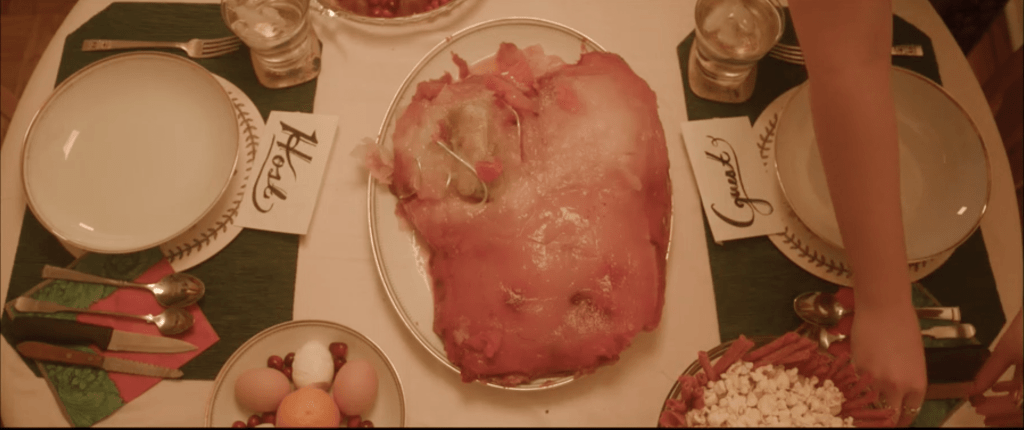
Recipe and ratios:
1 cup of liquid for 1 tablespoon of agar agar
1 cup of cranberries and pomegranates for every shade of red (1 cup is pinkish, 2 cups are a fuchsia, 3-5 cups is deep red), recipe favors cranberries over pomegranates because of price
3 tablespoons of sugar for every 1 cup of liquid
3 oz vodka every 1 cup liquid
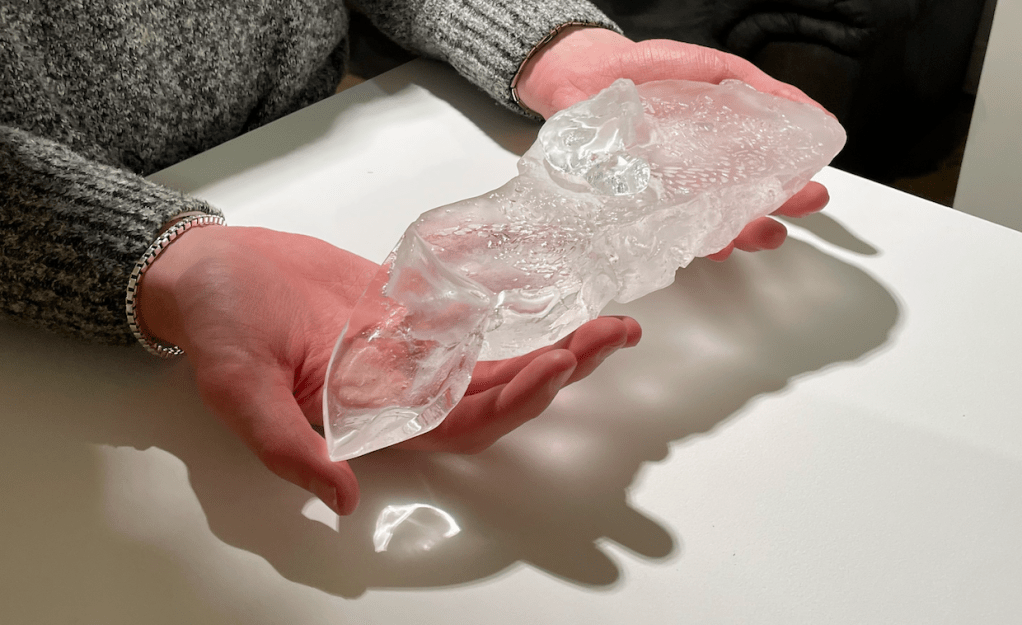
Lots of skin safe silicone
Agar agar
Spices (cinnamon, salt, pepper, rosemary, chili powder, etc. up to your tastes and tongue)
Reasonings behind the Seasonings:
Cranberry:
Raw cranberries are incredibly bitter, tart, crunchy, and powerful. They are grown in bogs, and varieties can be found in North America and parts of southern England and areas of the low lying Netherlands. The Algonquian People from what is now New England used them for healing rituals. The Lenni Lenape people from what is now New Jersey had a myth of the origin of cranberries. According to them, a giant beast fought all the other creators, because he thought he was the king of all beasts. The Great Spirit, Ketanëtuwit in the Lenape language, destroyed this beast with a blast of lightning. This left the land destroyed, turning it into a bog. The Great Spirit then created the cranberry, growing on long vines, to cover the ugliness of the bogs. Several Indigenous peoples in New England used cranberries as a medicine and dye for textiles. In order to produce cranberries, farmers must flood the bog, which makes the vines float to the surface. Then, the berries are picked up by large rakes with long teeth. Cranberries are often associated with Thanksgiving, and the abundance of earth. They are a flavorful and colorful contrast to the otherwise boring meal of turkey, potatoes, and stuffing.
Pomegranate:
Pomegranates originated somewhere in Persia, but spread across the Mediterranean, across the Middle East, all the way to China. The pomegranate is seen as rich or plentiful because of the hundreds of seeds within each fruit. Within Judaism, pomegranates are mentioned in several hymns, and seen in early decorative art such as sewn onto high priests robes or carved into temple columns. Pomegranates are also said to have 613 seeds, which is the same number of laws for Jewish people, or mitzvot, in the Torah. In this lens, the fruit is seen as abundant, faithful, and traditional. In China, the pomegranate is seen primarily as a symbol of fertility. The ancient Greeks believed that the Pomegranate tree grew from the blood of Dionysus, and Persephone was forced to eat it by Hades. Because Persephone ate the seeds, she had to return to the underworld every year. As a result, winter happens when she is in the underworld, whereas in the spring she returns. It is also found in surviving texts as a form of birth control. Therefore, to the Greeks, the pomegranate is a symbol of rejuvenation, eternal life, and/or a phase or pause (in life cycles and fertility). Early Christian’s, influenced by the Greeks, view the fruit as a symbol of resurrection. They also view it as chastity because of the many seeds in one casing, as well as unity under one power, which is a metaphor for the importance of the Church. The pomegranate is a symbol for many cultures, and I focused mainly on the Greek and Jewish interpretations or representation of it.
Spices:
Cinnamon specifically is native to Sri Lanka, Myanmar, and the Malabar Coast of India. This is Ceylon cinnamon. Cassia cinnamon is found in Vietnam and other parts of Asia. For this recipe, Ceylon cinnamon is used because it is more rich and sweet, so we will focus on that. In Egypt it was used for religious and embalming practices. In medieval Europe it was utilized for religious rites and as a flavoring. In terms of health, it has many antioxidants and anti-inflammatory properties, and has been studied as a supplement for heart problems. It brings a flavorful and seasonal kick to an otherwise boring recipe.
Vodka:
Vodka is a clear distilled liquor ranging from 40 to 55 percent alcoholic content. It is made from cheap materials suitable for fermentation, such as cereal grains or potatoes. The word vodka is a diminutive of the Russian word vodka, meaning water. It possibly originated in the 8th or 9th century, but it is confirmed to be present in Russia in the 14th century. It was mostly popular in the Balkan region, but after World War II, it became consumed rapidly across the US and the rest of Europe. Originally used for medical and antiseptic uses, it became a popular drink, and synonymous with Russian identity because of its use in social, political, and militarism contexts.
Agar agar/jello:
Jello has captivated Americans for decades. Before it was in American kitchens, it was considered a delicacy in Europe because of the intensive process of creating it through the boiling of animal bones and skin. But, in the mid 19th century, the toil and labor was eliminated, instead becoming an easy powder for workers to create a fast and easy meal. However, the average American was working more due to the industrial revolution. It was a dish that could be made quickly and cheaply, which was a priority for workers in the industrial revolution. Workers being exploited under industrial conditions craved a meal that was wholesome, and in the early 1900s, the advertisement of the Jello girl created the association with sweetness and innocence with jello, resulting in soaring sales.
It soon became a staple in American households because of its versatility as a savory or sweet dish, and it exemplified the traits of domestic reform for housewives: purity, order, and efficiency. It utilized new domestic tools for women such as the stove. Housewives could encase their leftovers with gelatin, and they did not require any additional sugar or seasonings as it already had those ingredients. Gelatin revolutionized the salad, it would eliminate any messiness that is traditionally expected from eating. The Great Depression increased jello sales because it was a substance that could stretch leftovers for weeks. Gelatin dishes became a feminine food, an affordable food, and a fast food, in contrast to the masculine steak and potatoes. They are an iconic image and sensory experience in American memory.
Sugar:
Plantations developed from Mediterranean farm systems which grew cash crops for trade rather than important crops for local use. Europeans were first exposed to this during the Crusades through interactions with Muslim agriculture andtropical/warmer climates. Europeans fell in love with sugar cane for its sweetness, plentiful culinary and beverage possibilities. It was also a status marketer, because it was a luxury to be able to afford. To have decaying teeth was a sign of wealth because to have tooth decay, one must consume a large amount of sugar. As a result, in search of even higher profit margins and the colonization of the Caribbean and Americas, Europeans modified this plantation system through slave labor. These Europeans became sugarcane plantation owners in the Caribbean and the Americas. They forcibly kidnapped, murdered, and colonized Africa through the transatlantic slave trade. Slaves from Africa were kidnapped and brought to these plantations to produce sugar and other cash crops for plantation owners. Millions of people were abducted, and this spurred one of the largest genocides in human history, perpetrated for cash crops such as sugar. The sugar I used was likely from the Dominican Republic, at the Central Romana plantation, farmed by Haitian people trapped on the plantation. Central Romana is rife with human rights abuses against Haitian and stateless people, and fills the pockets of billionaire brothers Alfonso and Pepe Fanjul; operating like its own government within the DR because of the brother’s connections with various international governments. While conditions have improved drastically since chattel slavery, it is still important to note that the craving for cheap sugar comes at the expense of other peoples human rights and dignity.
Inspired by
Eva Hesse
Joseph Maida (Things R Queer series)
Next Floor (Short film) by Denis Villanueve
Edible Woman by Margaret Atwood
Sources used throughout project:
https://www.cranberries.org/history
https://lithub.com/tag/the-book-of-difficult-fruit/
https://www.britannica.com/plant/cinnamon
https://www.seriouseats.com/history-of-jell-o-salad
https://www.britannica.com/topic/alcoholic-beverage
https://vforveggy.com/coconut-milk-agar-jelly.html
https://www.simplyrecipes.com/recipes/cranberry_sauce/
https://www.smooth-on.com/howto/basics-mold-making/


 Alexandra Faye Friedman